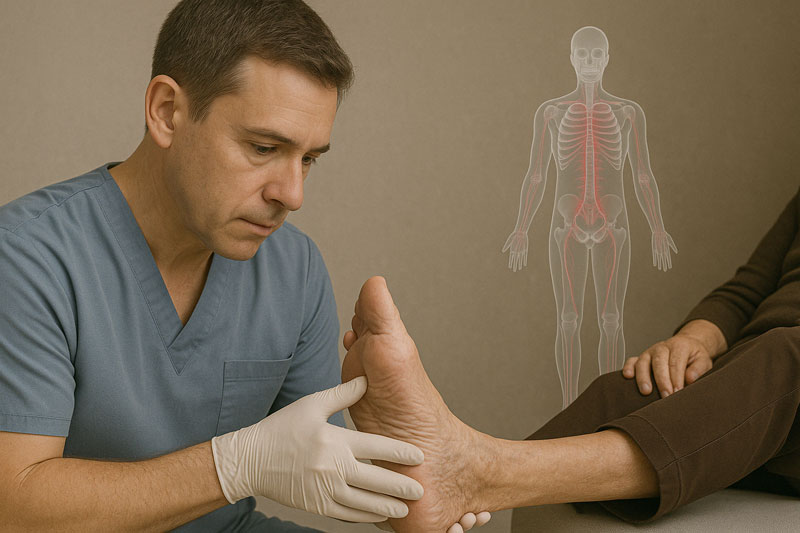
Your feet are often overlooked, yet they are crucial to your overall health and quality of life. With 26 bones, 33 joints, and over 100 muscles, tendons, and ligaments, they are the foundation for your entire body. When something goes wrong, like pain, misalignment, or limited mobility, it can lead to problems elsewhere, including your knees, hips, and back.
More than just structural support, your feet can also serve as early warning signs for broader health conditions. For instance, tingling or numbness may be a sign of diabetes or neuropathy, while cold or swollen feet could signal circulatory issues. Even symptoms like foot cramps or nail changes might point to nutritional deficiencies or fungal infections.
Ignoring foot discomfort can negatively impact your day-to-day life. Conditions like plantar fasciitis or bunions may alter how you walk, which can cause strain on other parts of your body. Over time, this can reduce your mobility and affect your mental and emotional health. On the flip side, when your feet feel good, you’re more likely to stay active, confident, and emotionally balanced.
Even simple practices like daily foot checks, proper hygiene, wearing well-fitted shoes, and regular stretching can make a big difference. It’s also important to avoid going barefoot on hard surfaces, rotate your footwear, and seek medical attention when problems persist. Ultimately, taking care of your feet is more than just comfort, it’s an investment in your long-term well-being.
By giving your feet the attention they deserve, you’re taking an important step toward maintaining your health, independence, and quality of life.